
In the money laundering business, how criminals move, disguise, and integrate illicit proceeds depends heavily on the industry they exploit.
For compliance teams and regulators, the challenge is to understand how those industry characteristics create particular AML vulnerabilities and how to design controls that fit those realities.
In this article we will walk through why industry matters, what industries present high-risk and will look into mitigation measures you can adopt or shape your organization’s customer risk assessment.
Why Industry-Specific Analysis Matters?
Anti-money laundering programs are often built around general principles – customer due diligence, transaction monitoring, and suspicious activity reporting. But in practice, the way money laundering occurs, the controls that work, and the red flags that matter most can differ dramatically from one industry to another, therefore a universal, one-size-fits-all approach simply doesn’t reflect how criminals actually operate.
Criminals follow opportunity. They look for industries where money can move quickly, anonymously, or with minimal scrutiny. Each sector’s business model creates distinct vulnerabilities that can result in different money laundering or terrorism financing risks. For example, a financial institution that operates digitally and does not accept cash has lower vulnerability to be exposed to the risk of placement where illegal funds enter the financial system. Recognizing which stage of the laundering process your industry is more vulnerable helps to shape and target controls. More examples of how various risk factors can be segmented to the risk of money laundering are provided below:
| Business-Model Factor | Low AML Risk | Medium AML Risk | High AML Risk |
|---|---|---|---|
| Customer Transparency | Retail clients, public entities, verified employees | Mix of retail and corporate customers | Anonymous, offshore, or shell company clients |
| Payment Methods | Digital bank transfers, recurring automated payments | Mix of card, digital wallet, and bank transfers | Cash-intensive or cross-border wire transfers |
| Product/Service Liquidity | Non-transferable services (utilities, education) | Physical goods with clear records (vehicles, electronics) | Easily transferrable assets (art, gold, crypto, luxury goods) |
| Geographic Exposure | Domestic only, stable jurisdictions | Some cross-border transactions | Exposure to high-risk or sanctioned regions |
| Transaction Volume & Velocity | Predictable, low-volume activity | Moderate or seasonal peaks | High-frequency or high-value transactions |
| Use of Intermediaries | Direct relationships with clients | Limited use of third-party agents | Multiple intermediaries or unregulated agents |
| Regulatory Oversight | Fully supervised industries (banks, listed utilities) | Partially regulated or self-regulated sectors | Lightly regulated or emerging industries (crypto, art market) |
Disclaimer: This table is provided for general informational and educational purposes only and should not constitute legal, regulatory, or compliance advice and should not be relied upon as such.
Authorities understand that not all businesses present equal financial crime related risks. Also, deploying a “one-size-fits-all” compliance program is not an option as it risks both over-controlling low-risk activity and under-controlling high-risk transactions. As a result, many of the regulatory bodies, like FATF, the EU, FinCEN, AUSTRAC and others define industry-specific guidelines for financial institutions and Designated Non-Financial Businesses and Professions (DNFBPs) and impose tailored obligations on them – from recordkeeping to customer due diligence (CDD) and suspicious transaction reporting.

FATF’s publications on risk-based approach for Virtual Currencies, Banking Sector etc (Source: FATF).
By not addressing these guidelines, the companies are exposed to AML failures that often lead to more than fines – they damage trust and access to financial services and can destroy investor confidence overnight.
High-Risk Industries Across Different Financial Crime Risks
While often grouped under the umbrella of “financial crime,” the underlying risks and mechanics of money laundering, terrorism financing, sanctions evasion, proliferation financing, and fraud differ significantly in purpose, methods, and detection challenges.
Money laundering focuses on disguising the origins of illicit funds derived from criminal activity, aiming to make them appear legitimate. Terrorism financing, on the other hand, may involve both legitimate and illicit funds, with the goal of supporting violent or extremist activities rather than personal enrichment. Sanctions evasion typically entails circumventing trade or financial restrictions imposed by governments or international bodies, often through complex corporate structures, front companies, or indirect payment routes. Proliferation financing (funding of weapons of mass destruction programs (WMDs)) relies on deceptive trade and shipping practices to acquire dual-use goods under false pretences. Finally, fraud involves the deliberate deception of victims for financial gain and can serve as both a predicate offense for money laundering and a source of funds for other illicit purposes. Understanding these distinctions is critical for developing targeted risk assessments, detection controls, and reporting mechanisms that reflect the unique typologies and regulatory expectations associated with each threat.
Example of High-Risk Industries in Money Laundering can include:
- Financial Institutions sit at the centre of value flows. They process transfers, hold accounts, allow cash deposits and enable currency exchange – all functions criminals need to launder funds.
- Real Estate – high-value assets, opaque ownership, offshore buyers, property purchases used to integrate funds (especially using cash).
- Casinos and Gaming – cash deposits, anonymity, chip-based transactions in online gaming platforms
- Precious Metals, Art, and Luxury Goods – easily transportable high-value assets, anonymity of buyers or weak provenance checks as they are often sold in private deals, items retain value across jurisdictions.
- Cryptocurrency and Virtual Assets – virtual assets can be pseudo-anonymous, move instantaneously across borders, chain-hopping and interact with unregulated or lightly regulated venues (e.g., decentralized exchanges, mixers).
- Professional Services – professional advisors sit at the interface of complex transactions and company formation. A lawyer can create corporate structures or facilitating trusts can (deliberately or unwittingly) enable concealment.
Example of High-Risk Industries in Terrorism Financing:
- Charities & Nonprofits – can be when they operate in conflict zones, their cause is questionable, or it sends funds to high-risk jurisdictions.
- Money Transfer Services – small recurring transfers, high-risk regions where terrorist organizations are present.
- Crowdfunding Platforms and Virtual Assets – funds or virtual assets can be used to collect funds for terrorism events or sent directly to the terrorist organizations.
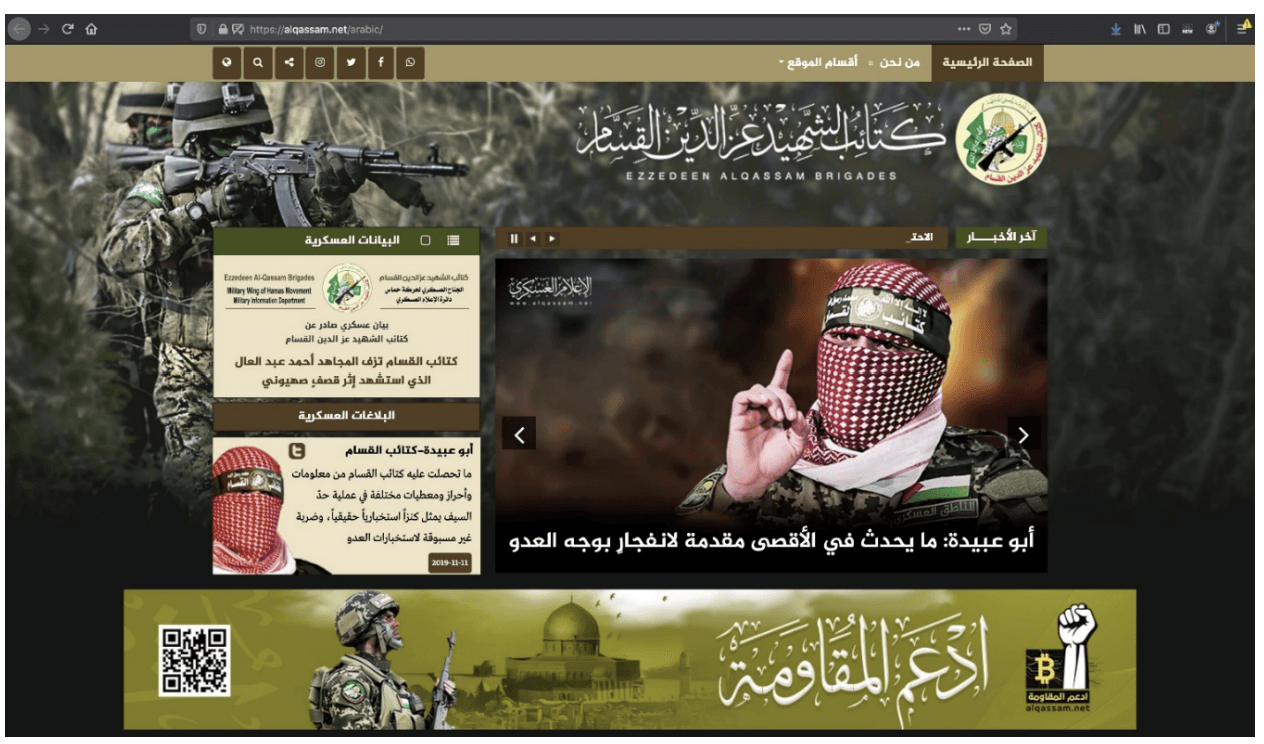
One of the Palestinian domain sites providing information and instructions for contacting and donating using virtual currencies to the al-Qassam Brigade, that is a recognized terrorist organization (Source: the United States Attorney for the District of Columbia)
Example of High-Risk Industries in Sanctions & Proliferation Financing:
- Banking & Trade Finance – payments routed via intermediaries, falsified SWIFT messages, complex documentary credits and cross-border flows that could be related to the trade-based money laundering which offers major opportunities to misstate value, quantity, or quality to shift value across borders.
- Trade & Shipping / Logistics – concealment of destination or consignee, ship-to-ship transfers, false documentation (e.g., country of origin), movement of dual-use goods and materials.
- Energy, Oil & Commodities – front companies, re-flagged vessels, falsified invoices.
- Technology & Manufacturing – dual-use goods sent or sold to sanctioned end-users, diversion through intermediaries, falsified export information.
- Precious Metals, Art, and Luxury Goods – the art and luxury sector provides a valuable loophole for individuals or entities under sanctions to store, move, or convert wealth outside traditional financial systems.
Examples of High-Risk Industries in Fraud:
- Financial Services / Banking – private and business customers being exposed to credit card fraud, identity theft, account takeover, investment scams etc.
- Online marketplaces & E-commerce – online transactions have limited face-to-face interaction and digital marketplaces can facilitate fake purchases and/or rapid payment flows, websites that impersonate legit marketplaces (e.g., Amazon).
- Government Contracting – large budgets that can be misused by weak procurement programs, subcontracting chains etc.
Challenges Across Various Industries
The AML landscape evolves as criminals adapt rapidly. Some of the challenges that financial institutions face across industries when managing their Anti-Money Laundering (AML) risks include the following:
Lack of Regulatory Guidance – innovation often outpaces compliance frameworks. Fintechs, virtual asset platforms, crowdfunding portals, and online marketplaces have introduced new laundering vectors before regulators could adapt. An industry-specific approach helps organizations self-assess and stay ahead of regulatory expectations rather than waiting for formal mandates.
Artificial Intelligence (AI) – as AI tools continue to rapidly advance, these technologies are more likely to be used to bypass KYC controls and for fraud-related purposes.

2-year progress of AI-generated videos of Will Smith eating spaghetti (Source: Min Choi on X)
Evolving Typologies and Resource Constraints – financial crime methods evolve faster than compliance frameworks. From trade-based money laundering to synthetic identities and mule networks, typologies are increasingly complex and adaptive. Many institutions still rely on legacy systems, manual reviews, and limited investigative capacity. Combined with growing regulatory scrutiny and personal liability for compliance officers, this creates a resource and technology gap.
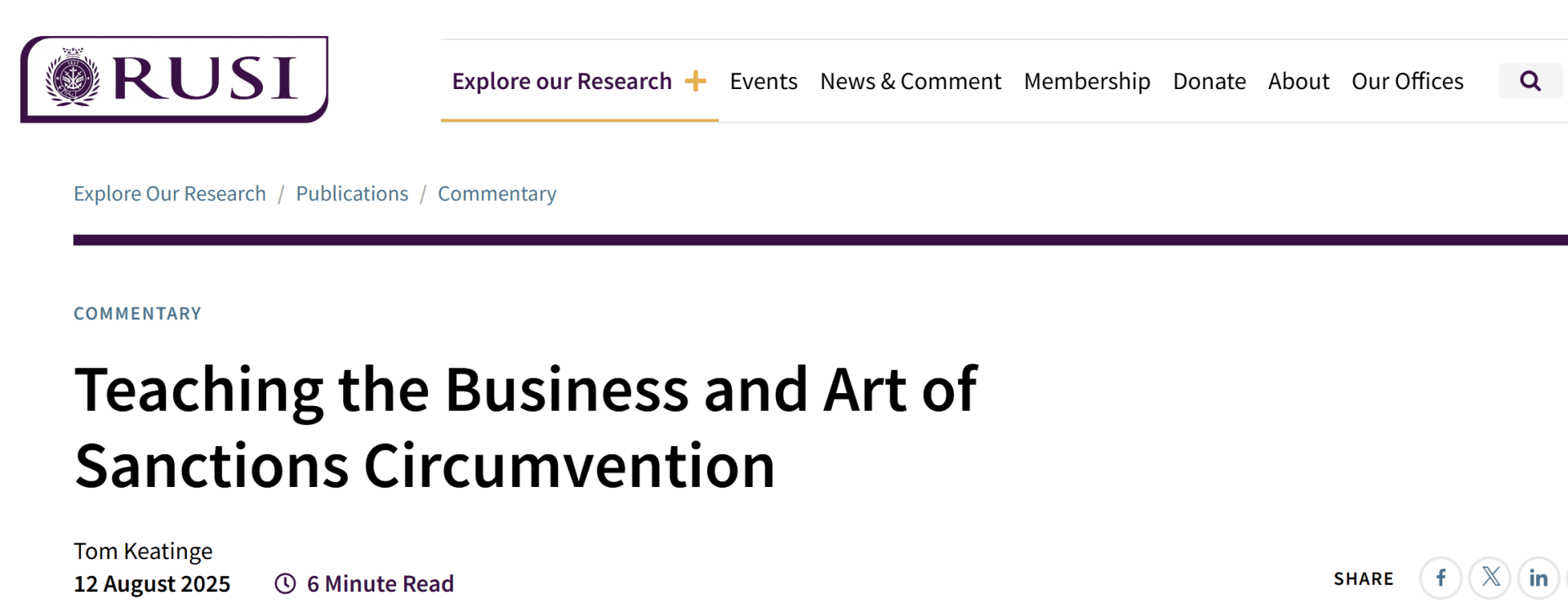 Royal United Services Institute (RUSI) published an article explaining that Moscow’s Higher School of Economics (HSE) currently offers courses called ‘The EU and sanctions: where are the weaknesses in 2025?’; and the ‘Sanctions labyrinth: how not to be hit by primary and secondary restrictions’. Source: RUSI
Data Silos and Information-Sharing Barriers – AML effectiveness depends on access to high-quality, cross-sector data – yet privacy laws, technological incompatibility, and institutional reluctance often block collaboration. Banks, fintechs, and non-financial sectors (like real estate or casinos) hold different pieces of the same puzzle but can’t easily share this intelligence. Without integrated data sharing — whether through public-private partnerships or federated analytics models – suspicious activity often goes undetected.
Evolving Trend – Shared Ownership in Private Sector
Public authorities that share their intelligence with each other (e.g., like EUROPOL) is a common standard nowadays. However, there are some interesting trends that are worth keeping an eye on.
In the fraud world, the United Kingdom on 2024 October 7th introduced the mandatory reimbursement requirement for authorized push payment (APP) fraud. In the situation between the paying payment service provider and the recipient, if both are at fault, then they are both liable to cover 50% of the reimbursement each. If only one is at fault, that payment service provider must pay the whole reimbursement. If both are at fault and the customer is at fault, each party bears 33% of the responsibility (meaning the customer receives reimbursement of only 66% of the loss). If neither payment service provider is at fault, the compensation is paid from a pooling fund to which all members contribute.
In addition, the notion that protecting consumers from scams requires collaboration across the digital ecosystem was also recently highlighted when Revolut publicly called on Meta to take stronger action against fraudulent ads and scam content circulating on its social media platforms, arguing that tech companies play a crucial role in preventing users from being deceived before the money ever reaches the banking system. Revolut also urged Meta to compensate victims of fraud facilitated through its platforms, reflecting a broader industry push toward shared accountability between financial institutions, technology firms, and digital advertisers.
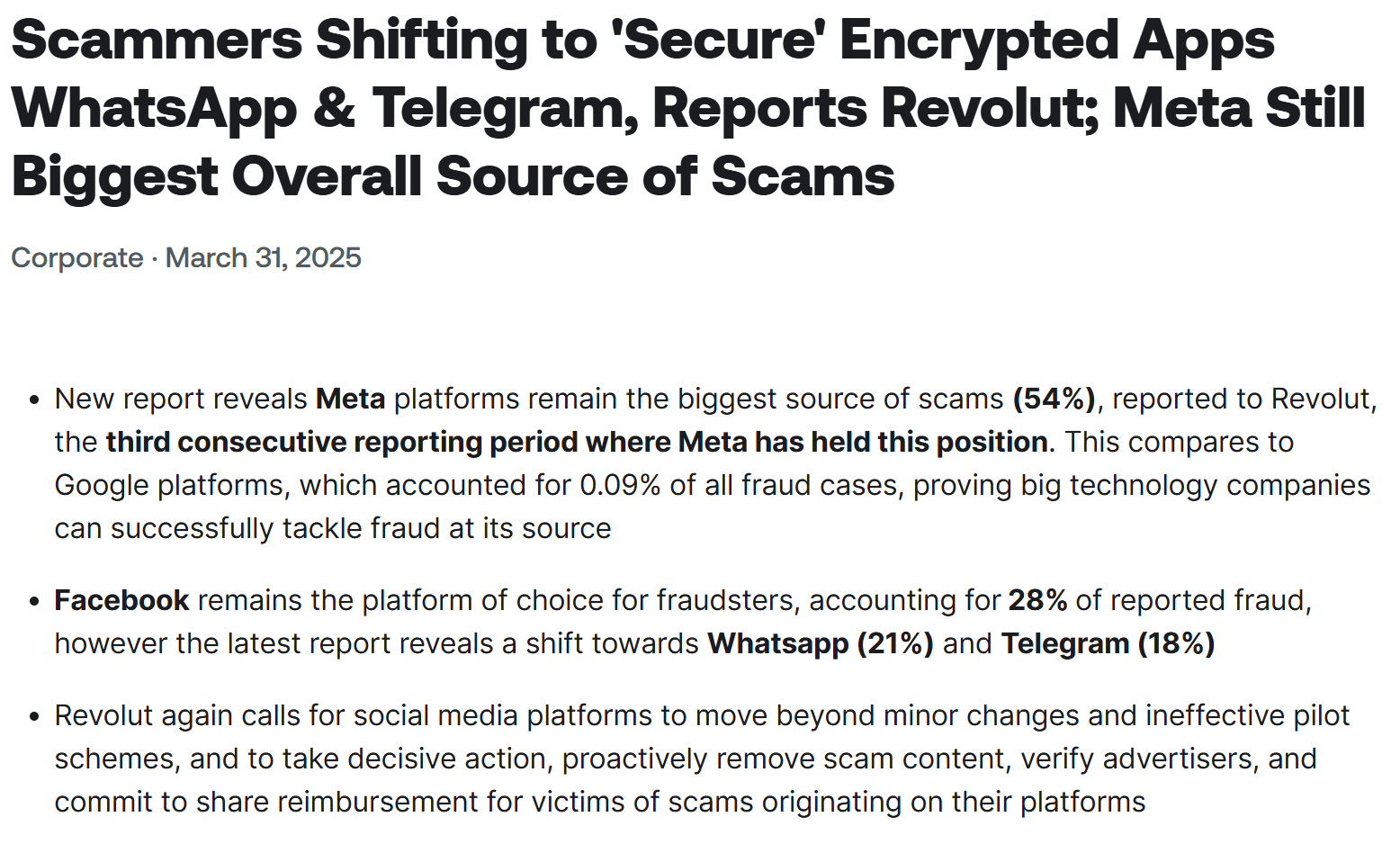
Revolut’s statement in their website where it is noted that Meta platforms accounted for 54% of scams that were reported to Revolut. Source: Revolut
Risk Mitigation Strategies
Understanding the risk drivers is the first step toward designing effective, industry-calibrated AML controls. Next, you need to create a risk-based program tailored to your industry characteristics which should cover at least the following elements:
Risk Assessment which is specific to your industry – map how your products, customers, channels, geography and technology raise compliance-related risks
Deploy Know Your Customer (KYC) controls to meet your industry realities – for financial institutions it can be robust KYC, beneficial ownership checks for corporate customers, enhanced due diligence (EDD) process and proper screening checks. Deploying KYC controls in other industries is not about replicating bank-style compliance, but about re-engineering KYC to deliver both regulatory assurance and best user experience.
Implement Tailored Transaction Monitoring – generic rules produce noise. Tune scenarios to industry-specific patterns which can balance and reduce false positives and improve detection.
Additional Controls for Gatekeepers – if your organization provides services to the DNFBPs, ensure that they are adhering to their AML obligations and reporting lines.
Maintain Robust Recordkeeping and Audit Trails – clear documentation of the decisions taken (including escalation) supports regulatory reporting and prepares you for internal audit. Maintain retention policies consistent with regulation and business needs.
Train Staff in Industry-Specific Red Flags – frontline staff need tailored training that maps real-world scenarios to actionable steps (for example, what to do when a property buyer wants a complex offshore structure).
Ongoing Improvements — follow most relevant regulatory guidelines for your industry, also use information obtained via industry groups, Financial Intelligence Units (FIUs), and regulators which is crucial for spotting emerging typologies in order to improve your compliance program. If possible, try participating in the public-private partnerships.
Use RegTech & Analytics – deploy tools for identity resolution, sanctions screening, behavioural analytics, and blockchain tracing where relevant. But remember – technology is a force multiplier, not a replacement for governance and specialist expertise.
Conclusions
A mature AML program is more than a stack of policies and a screening tool. It’s an intelligence function: understand the business, understand your clients and risks that they present, and apply controls where they matter most.
Industry characteristics – whether it’s the cash intensive casino, the opacity of an offshore property purchase, or the speed of a crypto transfer — fundamentally shape the risk profile. Regulators expect the organization to know that and to act accordingly.
AMLYZE helps compliance teams operationalize that understanding – turning industry-specific risks into measurable, actionable intelligence. With integrated modules for customer screening, transaction monitoring, and risk assessment, AMLYZE enables you to detect emerging typologies, reduce false positives, and build a risk-based program that truly reflects your business reality.
👉 Ready to see how AMLYZE can strengthen your industry-specific AML risk assessment? Request a demo today.
👉 To understand how geography interacts with industry risk, you can also read our companion article:
Geographical Risk in AML: What Compliance Teams Need to Know