
Anti–Money Laundering (AML) compliance is fundamentally about understanding and managing risk. Financial institutions are not expected to eliminate money laundering entirely, but they are expected to identify, assess, and mitigate the risks that arise from their business activities. Among the core pillars of AML risk management (customer risk, geographic risk, delivery channel risk, and product risk), the product risk often shows where the key business vulnerabilities are.
Regulators increasingly expect institutions to demonstrate a deep, documented understanding of product risk. This includes not only identifying high-risk products but also explaining why they are risky, how the risks manifest, and what controls are in place to mitigate them. Product risk assessment is therefore not a theoretical exercise; it is a living process that must evolve alongside innovation, market pressure, and criminal adaptation.
In this article we will explore the product risk area in AML compliance in more detail, understand what product-related risks are, identify the key drivers behind them, share concrete examples of high-risk products and practical approaches to assessing product risk.
What Are Product-Related Risks?
Product-related risk refers to the inherent and residual money laundering and terrorist financing risks associated with the financial products and services an institution offers. A product’s risk profile is shaped by how it enables the movement, storage, or transformation of value. Products that allow fast transfers, minimal documentation, limited traceability, or indirect ownership are generally more attractive to criminals. More importantly, product risk exists even when customers appear legitimate on the surface. For example, a low-risk customer using a high-risk product may present a higher risk than a high-risk customer using a tightly controlled, low-risk product.
Products shape how money moves. They define transaction speed, anonymity, cross-border reach, complexity, and the degree of customer interaction. A well-designed AML program recognizes that certain products are inherently more attractive to criminals because they offer convenience, opacity, or rapid value transfer. Conversely, poorly understood product features can unintentionally create vulnerabilities, even in otherwise low-risk customer segments. Product risk does not arise randomly. It is driven by identifiable characteristics that influence how easily a product can be misused for illicit purposes. Understanding these drivers allows institutions to assess risk systematically rather than relying on intuition or regulatory checklists.
| Risk Factor | Low Risk | Medium Risk | High Risk |
|---|---|---|---|
| Anonymity / Identifiability | Fully identified customers with verified identity and beneficial ownership; no third-party use | Identity verified but limited transparency over underlying beneficiaries or pooled usage | Anonymous or pseudonymous use; beneficial ownership obscured through nominees, or intermediaries |
| Transaction Speed | Manual processing with delays allowing pre-execution review | Same-day or near-real-time processing | Instant or near-instant execution |
| Transaction Volume and Value | Low transaction limits and predictable, stable volumes | Moderate limits with occasional spikes requiring monitoring | High or unlimited transaction limits; large volumes that can rapidly move value |
| Geographic Reach | Domestic transactions only, within well-regulated jurisdictions | Cross-border transactions involving mostly low-risk jurisdictions | Broad cross-border reach including high-risk, sanctioned, or weakly regulated jurisdictions |
| Product Complexity | Simple, single-purpose products with transparent transaction flows | Moderately complex products with multiple steps or conditional features | Highly complex structures involving multiple legs, instruments, or layered arrangements |
| Liquidity / Convertibility | Funds held in a single form with limited withdrawal or conversion options | Convertible into multiple forms with some restrictions | Easily convertible between cash, digital assets, or other value stores with minimal friction |
| Delivery Channel | Face-to-face relationship management | Mix of Face-to-face and Non-face-to-face relationship management | Fully remote, Non-face-to-face relationship management |
| Use of Intermediaries | No intermediaries; direct relationship with end customer | Limited use of agents or third parties under contractual controls | Heavy reliance on intermediaries, agents with indirect customer access |
| Traceability of Transactions | Clear audit trail with complete originator and beneficiary data | Partial traceability requiring manual enrichment or follow-up | Fragmented or obscured audit trails, including pooled or aggregated transactions |
One major driver is anonymity or pseudonymity. Products that allow customers to transact without fully disclosing their identity, or that obscure the true beneficial owner, significantly increase AML risk. Even partial anonymity, such as pooled accounts or nominee structures, can complicate investigations and delay detection.
Another driver is transaction speed and volume. Products that enable rapid movement of funds, especially in high volumes or through automated processes, are attractive to money launderers seeking to layer transactions and distance funds from their criminal origin. Speed reduces the window for detection and intervention.
Geographic reach is also critical. Products that facilitate cross-border transactions, especially into or out of high-risk or poorly regulated jurisdictions, elevate money laundering and terrorist financing risks. This is particularly relevant when transactions pass through multiple intermediaries or correspondent relationships.
Complexity is a subtler but equally important driver. Products with intricate structures, multiple legs, or non-standard settlement mechanisms can obscure transaction purpose and make monitoring more difficult. Complexity increases the likelihood that suspicious activity will go unnoticed, either due to system limitations or human oversight.
Liquidity and convertibility matter as well. Products that allow easy conversion between different forms of value—such as cash, digital assets, or commodities—are useful for criminals attempting to integrate illicit funds into the legitimate economy.
Finally, degree of customer interaction plays a role. Non-face-to-face products, automated onboarding, and third-party intermediated services reduce opportunities for direct verification and increase reliance on technology. While these models are commercially efficient, they require stronger compensating controls to manage the added risk.
These drivers rarely operate in isolation. High-risk products typically combine several of them, creating compounded vulnerabilities that must be addressed holistically.
High-Risk Product Examples
While risk levels depend on context and controls, certain product categories consistently appear in regulatory guidance, enforcement actions, and typology reports as higher risk. Understanding why these products are risky is more important than simply labelling them as such.
Example 1: Correspondent banking services are a classic example. They involve one financial institution providing services to another, often across borders. The respondent bank’s customers are typically not onboarded by the correspondent, thus limited information is available which can create indirect exposure. There are multiple ways how the corresponding banking structure can be setup and some regulators (in this case the Australian regulator) has a good example on what is the difference between the Traditional, Nested and Payable-through or pass-through structures work.

Common Correspondent Banking Structures explained by AUSTRAC (Source: AUSTRAC)
Example 2: Trade finance products, such as letters of credit and documentary collections, are another good example. They involve complex documentation, multiple parties, and international trade flows that can be misused for Trade-based money laundering (TBML) via over- or under-invoicing, false documentation, and phantom shipments, all of which can be difficult to detect without specialized expertise. It is important to note that TBML can also occur via non-documentary trade where banks usually have only the name, address and account number of the payment originator (buyer) and name and account number of the payment beneficiary (seller). The payment is typically processed without human intervention via bank’s wire transfer. It is possible that very general payment information such as “Invoice number 123,” will be included, but that will not always be the case. In fact, there is rarely sufficient information about the purpose or nature of the underlying transaction to identify a payment as settlement of a trade transaction.
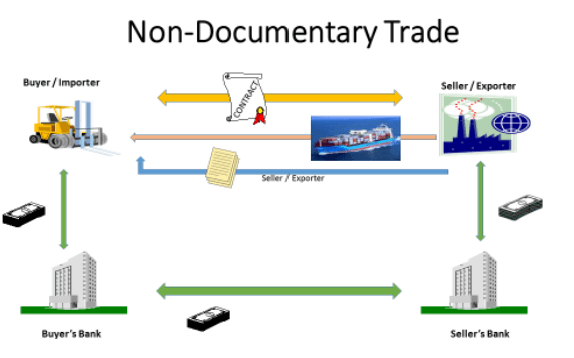
Non-documentary trade example provided by BAFT in their publication “Combatting Trade Based Money Laundering: Rethinking the Approach” (Source: AMLC)
Example 3: Virtual assets and crypto-related services represent a newer but significant risk area. While blockchain technology offers transparency at the ledger level, the use of wallets, mixers, privacy coins, decentralized platforms, and cross-chain bridges can obscure ownership and transaction purpose. The speed and irreversibility of transactions further increase risk.
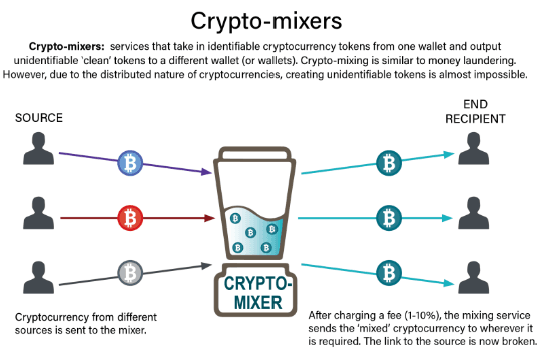
Explanation how crypto-mixers work by the UNODC (Source: United Nations)
Example 4: Cash-intensive products, such as cash deposits and withdrawals, remain high risk despite declining cash usage in some regions. Cash provides anonymity and is difficult to trace, making it a foundational tool for many criminal schemes. More importantly, the cash-intensive business industries (e.g., restaurants, retail stores etc.) can be misused in order to mix illicit funds together with the normal business transactions.
It is important to note that labelling a product as “high risk” does not imply it should not be offered. Rather, it signals the need for enhanced understanding, stronger controls, and ongoing monitoring.
How to Conduct Product Risk Assessment?
Assessing product risk is both an analytical and a governance exercise. It requires structured methodologies, cross-functional input, and regular review. Regulators expect institutions to demonstrate not only that risk assessments exist, but that they meaningfully inform decision-making.
Step 1: The process typically begins with product inventory mapping. Institutions must clearly identify all products and services offered, including variations and delivery channels. Product definitions should be precise enough to capture meaningful differences in risk profile.
Step 2: Inherent risk assessment. This involves analysing each product against predefined factors and risk ratings. It is one thing to assess the existing product, while qualitative judgment remains essential, particularly for new products.
Step 3: After inherent risk is established, institutions evaluate controls and their effectiveness. This includes the Know Your Customer (KYC) requirements, transaction monitoring scenarios, limits, reporting mechanisms, and other controls or mitigating factors. Controls should be assessed realistically, acknowledging system limitations and operational constraints.
Mitigating product risk starts with asking the right questions. A product risk assessment that jumps straight to control descriptions often misses the point: the real issue is whether those controls meaningfully reduce the ways a product can be misused. The table below shows several questions that should be considered during this process:
| Control Area | Assessment Questions |
|---|---|
| Product Design and Governance | Who formally owns the product risk, and is that ownership documented and enforced? Have similar products previously required post-launch remediation due to control weaknesses? Do existing review cycles allow timely re-assessment of risk after product launch? |
| Customer Controls | Do current onboarding and due diligence standards provide sufficient assurance for the product’s risk profile? Will the new product impact other controls? (e.g., annual customer’s KYC limits) |
| Transaction Limits and Thresholds | Are existing transaction limits appropriate given the product’s functionality and misuse potential? Can limits be enforced consistently using current systems? |
| Transaction Monitoring and Detection | Do existing scenarios cover the expected transaction patterns of the product? Should the list of controls be expanded based on the new typologies? |
| Intermediaries and Third-Party Involvement | Is there sufficient visibility over intermediary activity using current reporting and controls? Can accountability for AML controls be clearly assigned under existing arrangements? |
| Data Quality and System Capability | Do existing systems capture all data required to assess and monitor this product’s risk? Are current data models flexible enough to support new transaction types or attributes? |
| Training and Operational Readiness | Do existing training programs adequately prepare staff to manage this product’s AML risk? Is current operational expertise sufficient, or would specialist knowledge be required? Are roles and escalation paths already defined for issues arising from this product? |
Step 4: The end result is a residual risk rating, which reflects the level of risk that remains after the existing controls are applied. This rating should align with the organization’s risk appetite statement, and the areas that require further improvements should be monitored. Finally, the product risk assessment needs to be approved by appropriate governance bodies.
Step 5: Period re-evaluation. Product risk assessments are not one-time exercises. They must be periodically updated when changes are made to the product or the controls improve. Failure to reassess product risk after changes occurred can result in a regulatory finding.
During this whole process, the documentation is crucial. Institutions must be able to explain their reasoning clearly, showing how conclusions were reached and how they translate into concrete controls.
Why Product Risk Matters More Than Ever
Product risk sits at the heart of effective AML compliance, even though it often receives less attention than customer or geographic risk. Products define the mechanics of financial activity, and criminals understand these mechanics well. They choose products strategically, exploiting speed, complexity, and opacity to move and disguise illicit funds.
A mature AML framework treats product risk as dynamic, not static. It recognizes that risk evolves as products change, customer behaviour shifts, and new technologies emerge. Assessments must therefore be grounded in reality, informed by data, and supported by strong governance.
The goal is not to avoid risk altogether, but to understand it clearly and manage it deliberately. Institutions that can articulate why a product is risky, how that risk manifests, and how it is mitigated are better positioned to meet regulatory expectations and protect themselves from abuse.
Mažvydas Miliauskas,
AML Risk & Assessments Lead at TransferGo
👉 Ready to see how AMLYZE can strengthen your industry-specific AML risk assessment? Request a demo today.
👉 For a broader view of how different risk types interact with product risk, read our companion articles: :
Geographical Risk in AML: What Compliance Teams Need to Know
Industry-Related AML Risks: A Guide for Compliance Teams
What Is Customer Risk in AML? Key Factors, Scoring Models, and Best Practices