
In today’s financial landscape, combating financial crime while reducing false positives has become one of the top priorities for organizations worldwide.
Since the funding for the compliance area is not unlimited, it is important to use the existing resources effectively by calibrating certain program elements, so they don’t unnecessarily overload the workload for the AML operations teams.
In the following sections, we will explore programs that can be affected, their key components, and some strategies for implementing effective measures that can help reduce false positives for your organization.
Which programs are most affected by false positives?
First, not all compliance programs are affected by the false positives issue. For example, when the risk-based approach is deployed in the Know Your Customer (KYC) area and customers are categorized into low, medium, or high-risk segments, you can predict the operational workload for the full year.
It is also important to take into account certain “surprises” as some customers could be affected by significant events which will require to trigger a review earlier than expected (e.g., a beneficial ownership change for a large business client).
So which areas are most vulnerable? There are 2 key compliance programs.
AML screening
The first program is the Anti-Money Laundering (AML) Screening is the process of identifying and assessing individuals, entities, and transactions to detect and prevent activities associated with money laundering, terrorist financing, and other financial crimes. It involves the use of technology, databases, and compliance frameworks that can be used to screen customers, transactions, employees, vendors, partners and other third parties against the following:
- Sanctions lists: This process checks individuals and entities against global sanctions lists, such as those maintained by the United Nations, OFAC (Office of Foreign Assets Control), and the European Union. Sanctions screening ensures that businesses do not engage with prohibited parties as such violations can result in large fines and other restrictions, including license revocation.
- Politically Exposed Persons (PEP) lists: PEPs are individuals who hold prominent public positions and are considered higher risk due to their potential exposure to corruption or misuse of power. PEP screening helps identify these individuals and apply enhanced scrutiny where necessary.
- Adverse Media: This involves monitoring news and media outlets to identify individuals or entities associated with financial crimes, fraud, or other illicit activities. Adverse media screening provides insights that might not appear in official databases (e.g., watchlists).
You can also read:
Sanctions Screening Process: Best Practices
Navigating the PEP Screening Landscape: an Effective Approach
Importance of Adverse Media Screening
Transaction monitoring
The second is the Transaction Monitoring program that refers to the monitoring of customer transactions, including historical/current customer information and interactions to provide a complete picture of customer activity that helps to detect money laundering, fraud, or other illicit activities.
This program can used to detect suspicious transfers, unusual activity in the profile, cash deposits and withdrawals, or even the attempted transactions.
You can also read:
AML Transaction Monitoring Explained
The importance of the AML Screening and Transaction Monitoring programs
Any business is susceptible to be used to launder money from illicit sources. The financial sector is particularly exposed due to the nature of their operations and the potential for large financial transactions.
Thus, governments worldwide have responded by implementing stringent AML and economic sanctions laws and regulations, therefore when these processes are deployed efficiently, the organization can benefit in the following ways:
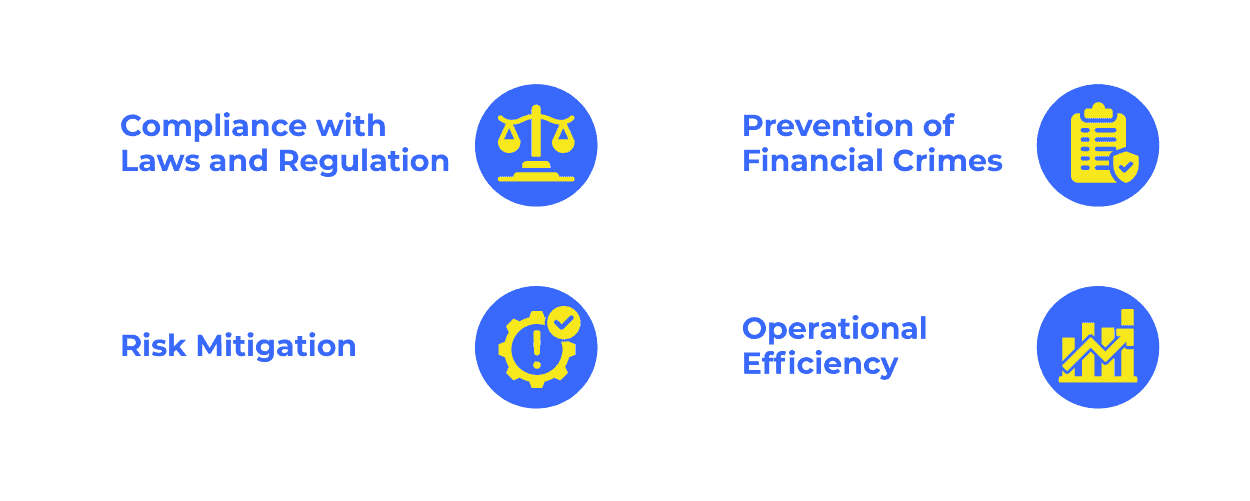
- Compliance with Laws and Regulations – AML screening and Transaction Monitoring are required by the local AML laws across the world. Non-compliance can result in hefty fines, reputational damage, and even loss of operating licenses.
- Risk Mitigation – Customer Due Diligence (CDD) is a cornerstone of AML compliance that involves verifying a customer’s identity, understanding the nature of their business, and assessing their risk level. By identifying high-risk customers early, like foreign PEPs, organization can assign correct risk rating and initiate Enhanced Due Diligence (EDD) process from the beginning of the business relationship (or whenever the customer becomes a high-risk customer during the ongoing business relationship). In addition, whenever the Transaction Monitoring cases are handled and customer provides new information about their activity, their KYC profile needs to reflect this new information.
- Prevention of Financial Crimes – illicit activities are often linked to organized crime and/or certain typologies like drug trafficking, human trafficking, corruption, and terrorism. AML screening and Transaction Monitoring help to detect such illicit activities and certain keywords that could be tied to specific typologies during the whole business relationship.
- Operational Efficiency – when the generated alerts and cases are properly calibrated, the employees are using their time on important tasks, which could also benefit in higher employee satisfaction and strong Culture of Compliance.
How to reduce false positives in AML Screening and Transaction Monitoring
False positive alerts that flag legitimate customers or transactions as suspicious is a significant challenge in AML compliance. Excessive false positives can lead the organization to operational inefficiencies, wasted resources, and delayed investigations. To address this issue, organizations need to refine their AML screening and transaction monitoring programs while leveraging advanced technologies and risk-based strategies.
Let’s look into some strategies that could help your organization to reduce the false positives.
Strategies to reduce false positives in AML Screening
Fine-Tuning Screening Lists – selecting the proper lists is a first step in reducing irrelevant matches. Overly broad or outdated lists can generate excessive number of alerts, therefore it is important to select only those that are relevant to your organization. For example, companies that are located in the EU are required to screen against the EU Sanctions list but in some cases when funds are sent outside of the EU, the organization might be required to screen against other lists.
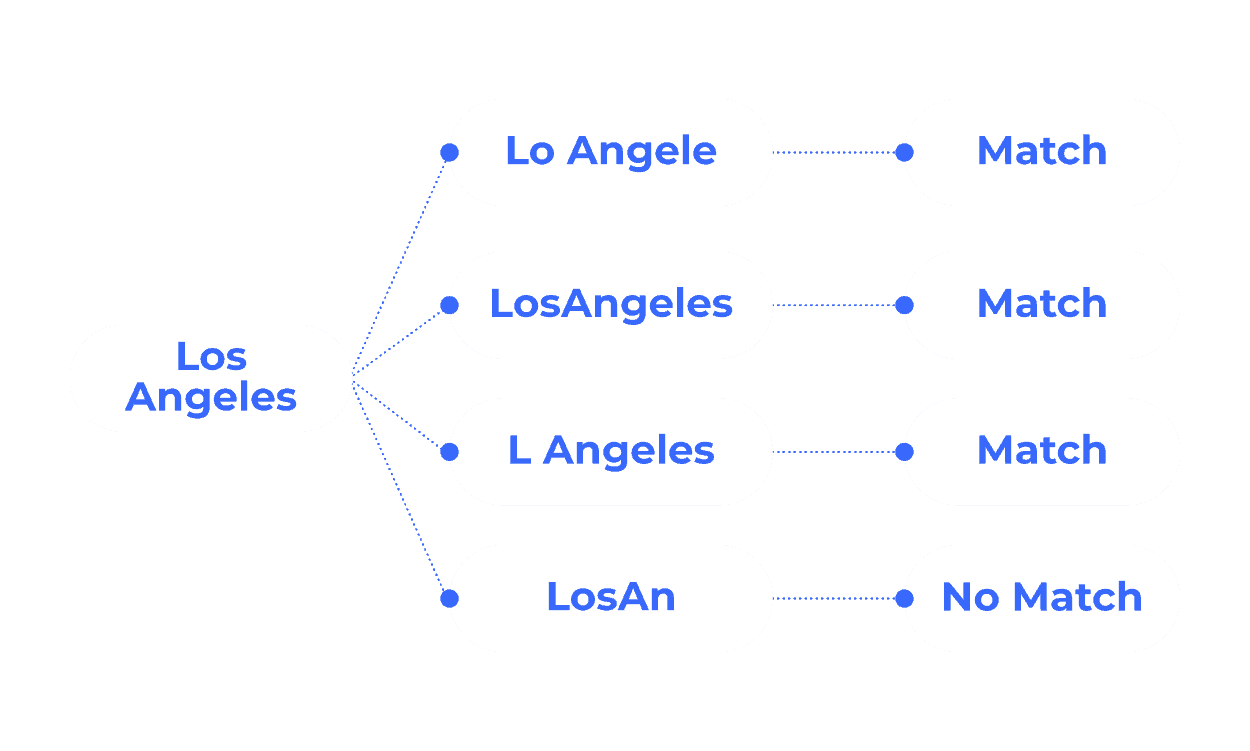
Ensure Fuzzy Matching Logic is Used – selecting threshold for name matching is crucial for reducing false positives while ensuring true matches are not overlooked. Fuzzy matching is a technique that identifies approximate matches rather than exact matches (e.g., using fuzzy logic to differentiate between common names, such as Mohammad or Muhamed). It is important to properly calibrate this logic because when the threshold for matching is set too low, many unrelated names may be flagged as potential matches, creating a considerable amount of work for analysts that is triggering irrelevant data.
Period Screening of Existing Customer Portfolio – customers’ risk profiles can change over time due to new sanctions, adverse media, or changes in their business activities. Regular screening helps identify previously low-risk customers who may now pose a higher risk, ensuring that appropriate due diligence measures are applied.
Ensuring Proper Data Quality – accurate, up-to-date customer data is mandatory if the organization wants to reach maximum efficiency and avoid mismatches during screening. For example, having all customer names that are provided on the ID document might ensure that customer is not flagged for unnecessary review, or by having customer’s gender captured might provide additional false matching element for the AML analysts.
Using inversed data – reversed date of birth formats (e.g., DD-MM-YYYY vs. YYYY-MM-DD), enhances the effectiveness of AML screening programs by capturing potential identity variations and avoiding missed matches. Criminals and sanctioned entities may attempt to manipulate personal details to evade detection. By incorporating multiple data format permutations, including inversed or slightly altered versions of key identifiers, screening systems can improve match accuracy.
Prioritize High-risk Alerts – while the term AML screening is an umbrella term for screening against PEP, Sanctions and Adverse Media lists, certain cases (e.g., Sanctions or TF) should be prioritized over other alerts.
Reducing Redundant and Duplicate Alerts – there should be ways to optimize systems for removing duplicate alerts by implementing alert suppression mechanisms (e.g., whitelisting) for cases already investigated and deemed non-risky. However, it is important to note that if there is a hit against a new potential match, it should be manually reviewed once again.
Continuous Tuning and Optimization – regularly update existing parameters based on local AML law requirements. Also, conduct periodic testing to ensure that no parameters are being left out.
Use Advanced Technology – if there is a possibility and resources available, use Artificial Intelligence (AI) and Machine Learning (ML) to analyse patterns to predict which alerts are most likely to be false positives. However, it is important to conduct Quality Assurance (QA) regularly in order to confirm that technology is working as intended.
Strategies to reduce false positives in Transaction Monitoring:
Customizing Rules and Scenarios – avoid generic, one-size-fits-all rules. Tailor transaction monitoring scenarios to align with specific customer profiles (private customers vs business customers), AML risk ratings (some rules could be triggered at lower threshold for high-risk customers compared to low and medium risk customers), industries (e.g., customers that work with Dual-use Goods), and regions. If possible, create typology-specific rules (e.g., PEP customers that send or receive EUR 50,000 or more in a given period of time).
| Rule name | Number of Alerts | Estimated Number of STRs |
|---|---|---|
| PEP Rule v1 | 100 | 5 |
| PEP Rule v2 | 50 | 4 |
| PEP Rule v3 | 20 | 1 |
Deploy Real-Time and Post-Event Monitoring – transactions can be monitored either in real-time or after they occur. Real-time monitoring allows immediate action when high risk patterns are identified, while post-event monitoring helps detect patterns over longer periods of time.
Behavioural Analytics – implement advanced analytics tools (e.g., dashboards) to establish customer-specific behaviour baselines, back-testing etc. Transactions then can be flagged only when they deviate significantly from these baselines (e.g., it is a common scenario to have 1 or 2 card transactions rejected in a single day, but 3 rejections are not common, therefore might require new controls to be deployed). If your organization is using AI systems, then such tools can help identify patterns that manual reviews or rule-based systems might miss).
Period Rule Reviews – money launderers continually adopt new tactics, requiring institutions to stay updated with emerging trends and technologies. Therefore, it is important to regularly review, and update rules based on new trends and typologies of financial crime. For example, if a new National Risk Assessment on Money Laundering and Terrorism Financing is introduced, then a deep dive is needed to understand if there is enough information provided for new rules to be created (or improving the old rules). Also, you might need to analyse some generated alerts to understand why false positives occurred and adjust monitoring rules accordingly.
Prioritization of Rules – if you have rules dedicated for targeting specific typologies, like Terrorism Financing or potential Sanctions breaches, then such alerts should be tiered and prioritized as they usually have much shorter reporting timelines.
Feedback Loops – incorporate feedback from compliance teams into the system to improve algorithms and fine-tune monitoring processes. Teams that are working with such alerts on daily basis might have valuable information about certain patterns and or recent Suspicious Activity Reports (SARs)that could help improve the estimated SAR ratio.
Unified Platforms – if possible, it is highly recommended to use unified platforms that combine AML screening and transaction monitoring processes. This unification could allow to optimize work for AML analysts (as they would need to check single platform), better data sharing and holistic risk assessments, reducing redundant or conflicting alerts.
Conclusion and the AMLYZE advantage
All in all, fine tuning the screening and the transaction monitoring programs could be a complex task. By adopting most of these strategies, organizations can significantly reduce false positives across both programs, enhancing their AML compliance efforts’ efficiency and effectiveness. This not only streamlines operations but also ensures that resources are focused on identifying and addressing genuine risks.
At AMLYZE, reducing false positives is one of our top priorities, and our latest analysis shows remarkable results. On average, our clients have successfully reduced false positives by up to 62% using our advanced AML/CFT solutions. By leveraging risk-based approaches and rule optimization, we help financial institutions streamline their compliance processes while maintaining the highest accuracy.